
The history of foodshakes
From Soylent’s Silicon Valley experiment to Sweden’s ComFoo and MËTTA. How the meal in a shaker developed into a category with many forms.

It starts with an everyday question: what do you do when you need to eat but have no time to cook? For some people, the answer is a packed lunch. For others, it became powder, water and a shaker. Foodshakes did not emerge from a single invention. Today’s category draws on older nutrition drinks, experiments in the technology world and companies trying to make a whole meal easier to carry.
Before Soylent: liquid nutrition has a longer history
Products that let people drink their nutrition existed long before the modern foodshake wave. Abbott dates the introduction of Ensure to 1973. The idea of nutrition in liquid form therefore did not begin with a technology company in the 2010s.
These products do not automatically belong to the same category. A nutrition drink with a particular intended use, a diet product and an everyday meal powder may look similar in a glass while differing in formulation and purpose. This history mainly follows the modern wave of nutritionally complete everyday meals.
2013: Soylent and the modern foodshake wave
Soylent is a natural starting point for the modern wave. According to its own history, Rob Rhinehart, Matt Cauble, John Coogan and David Renteln met in Silicon Valley in 2013. They worked in technology and wanted to simplify their own meals. Rhinehart began developing a blend that would make nutrition easier to obtain.
Within this timeline’s modern wave, Soylent comes first, ahead of Jimmy Joy and Huel. An experiment became a company. Soylent turned powdered food into a widely discussed consumer idea: a meal described by a formula, mixed with water and carried to work. Its history describes the move from powder to ready-to-drink products and wider distribution.
We therefore describe Soylent as a pioneer and a central early participant in the modern foodshake wave. This is a narrower claim than inventing all liquid or complete nutrition. Older history and distinct product categories remain behind today’s brands.

2014–2015: more European approaches
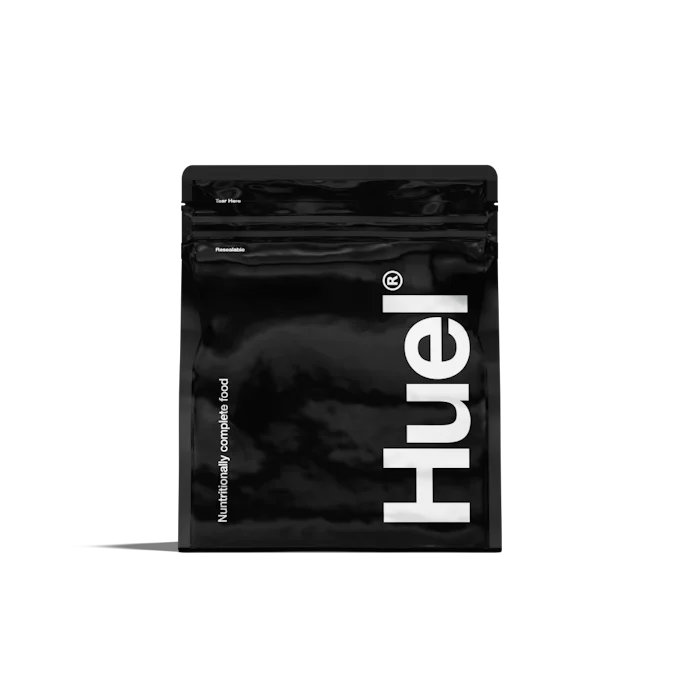
In the following years, several companies developed the modern meal-shake idea further. Jimmy Joy in the Netherlands says it has made nutritionally complete food since 2014. Huel dates its start under Julian Hearn to June 2015.
The category grew through more than new names on the same powder. Formats, recipes, flavour choices and sales approaches gave customers different options. Comparing a particular range and flavour is therefore more useful today than treating all foodshakes as interchangeable.
Founding dates help establish a sequence, but do not by themselves tell us when a particular flavour, bottle or product version went on sale in Sweden. That requires more specific launch evidence.
The Swedish background: Albin Sandell and SweJoy
Albin Sandell and the path towards ComFoo are important to the Swedish story. ComFoo’s own history describes the Framtidsmat project starting in 2016 and operating through the SweJoy brand. Experience with meal powders therefore preceded ComFoo’s own product.
The same account says operations paused in 2019 following problems in the supplier relationship. Work then began on a Swedish alternative. Sandell brought in Anders Cederberg, Anders Albäck and Bengt Åkesson from Brösarp to help develop the product and secure production.
This gives the Swedish story a clear progression: experience with the category and suppliers, followed by an own recipe and Swedish manufacturing. These dates come from the company’s own account and should not be confused with an independent survey of the entire Swedish market.
2020: ComFoo | Complete Food launches
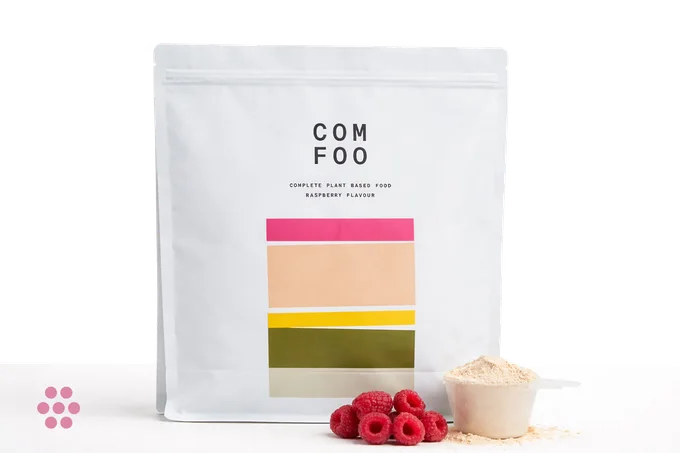
ComFoo | Complete Food was founded by Albin Sandell. Its published timeline dates the launch of its own product to 2020, following recipe development, production work and testing. This added an option with its own product development and Swedish manufacturing to the Swedish foodshake market.
A contemporary record appears in Ystads Allehanda. The publicly available introduction to an article published on 4 December 2020 reports that the finished ComFoo product was on the market. It names Albin Sandell, Anders Cederberg and Anders Albäck as the people behind the development work and describes Sandell as a pioneer. This establishes availability by that date, not an exact first-sales date.
The name Complete Food expresses the brand’s ambition: a meal in powder form rather than a product that only adds protein. The contents of the actual product still determine what a customer buys. Original, Sport and Krismat are different ranges and should be considered separately.
MËTTA and a broader Swedish market
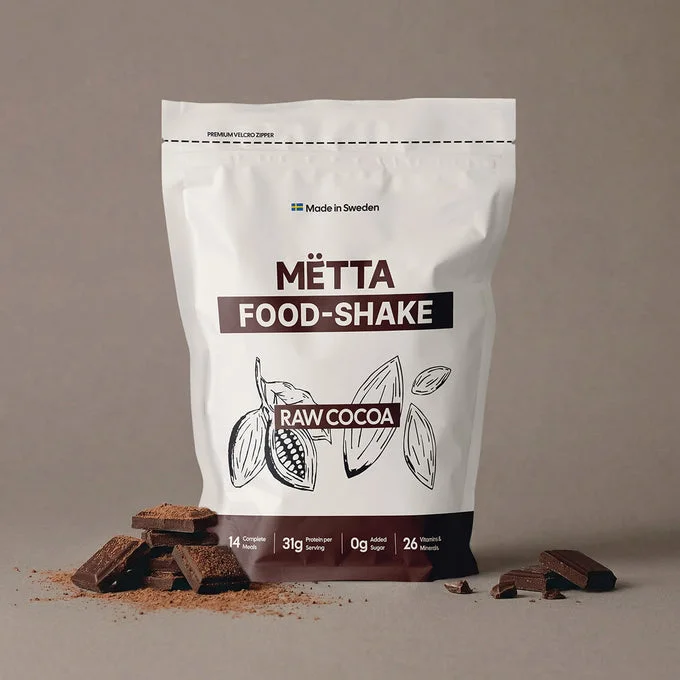
MËTTA, at eatmetta.com, is another part of Sweden’s foodshake story. The company gives 2020 as its founding year. Its history describes Swedish production and packing, and the development of foodshakes for everyday use.
That places MËTTA in the same period of Swedish development as ComFoo’s own product launch. The published accounts do not provide sufficiently precise launch dates to establish whose own product reached customers first. Founding a company and first selling a product are also different events.
Today, MËTTA describes Original Food Shake and Protein Plus Food Shake alongside separate protein products. A broader market gives customers more choices to examine: recipes, flavours, serving sizes, manufacturing, delivery and cost. A Swedish company name does not make every product identical in contents or intended use.
From one idea to many everyday choices
The modern foodshake story runs from Soylent’s experiment to a market with multiple companies, formats and national alternatives. Powder requires mixing. A ready-to-drink bottle can be opened immediately. Protein products and complete meals have different purposes, even when displayed together in a shop.
History is interesting, but current product contents are more useful when buying. Check the exact flavour declaration, serving size, pack cost and whether the product can be delivered to you. A company’s age or position on a timeline does not by itself decide which product fits your day.
Foodshakes lets you move from the story to the product ranges. We show an equally weighted average of reviewed flavours per 400 kcal and let you open each flavour for its own ingredients, nutrition and sources. History provides context; product facts provide something concrete to compare.
Sources and method
Editorial guidance. No personal recommendations or combined product ratings.
- Abbott / Ensure: Our Story
- Soylent: About the Company
- Soylent / Starco: Complete Nutrition Pioneer, företagshistorik
- Soylent: Complete Meal Powder, produktbild
- Jimmy Joy: About Jimmy Joy
- Huel: About Us
- Huel: Black Edition, produktbild
- ComFoo: Historien om ComFoo
- Ystads Allehanda, 4 december 2020: Måltidsersättningen Com Foo lanseras av pionjär (öppen ingress)
- ComFoo: sortiment och produktbilder
- MËTTA: företagsuppgifter och grundandeår i frågor och svar
- MËTTA: Om oss
- MËTTA: Original Raw Cacao, produktbild
How we review facts · Publisher and ownership